Saturday 10 October was World Mental Health Day. For twenty-four hours your social feeds were probably full of green ribbons, kind words and reminders to check in on your mates. Then Monday came, the alarm went off, and most of us got on with things.
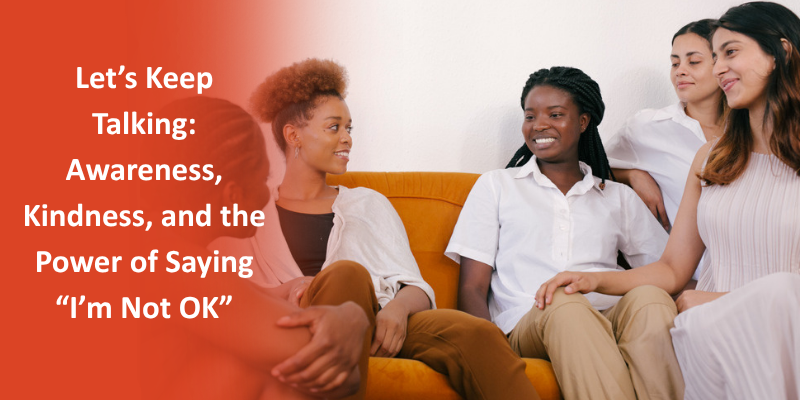
The day has passed. The conversation shouldn’t.
That’s fine. Nobody can live inside an awareness day. But the people who were struggling on the 10th are, for the most part, still struggling now. Mental health doesn’t keep to the calendar, so we thought it was worth carrying the conversation on a little longer.
This isn’t a lecture and it isn’t a sales pitch. We’re not selling anything here. It’s a plain-talking look at what mental health actually is, why it touches far more of us than we tend to admit, and the small, unglamorous things that genuinely help. Put the kettle on. This one’s worth five minutes.
So what do we actually mean by “mental health”?
Here’s the simplest way to think about it: everybody has mental health, in the same way everybody has physical health. Some weeks yours is in decent nick. Other weeks it’s held together with tea and stubbornness. Most of the time it sits somewhere in the middle.
A mental health problem is something a bit different. It’s when the way you think, feel or behave starts getting in the way of everyday life, and keeps doing so. That might be anxiety that makes the supermarket feel like an ordeal. It might be low mood that’s hung around for weeks rather than days. It might be stress that’s quietly started affecting your sleep, your appetite and your patience with the people you love.
More common than the British stiff upper lip would have you believe
The figure you’ll hear most often, from the charity Mind and from NHS trusts up and down the country, is that around one in four people will experience a mental health problem in any given year. Think about your office, your WhatsApp group, the queue at the post office. One in four.
And yet, as a nation, we’re not brilliant at talking about it. Plenty of us were raised on “keep calm and carry on” and “mustn’t grumble”. Ask someone how they are and the answer is “fine, thanks, you?” before you’ve finished the question. There’s something quite lovely about that resilience. There’s also something that keeps a lot of people suffering quietly when they don’t need to.
It’s worth knowing that mind and body are closely linked, too. NHS figures suggest that about 30% of people with a long-term physical condition, such as diabetes, arthritis or heart problems, also live with something like depression or anxiety. Looking after one usually means paying attention to the other.
Fame, money and talent don’t make anyone immune
If you’ve ever thought “what have I got to be down about?”, it might help to look at some of the people we see on telly and on the pitch. Over the last decade or so, a good number of well-known Brits have spoken openly about their own mental health, and every time one of them does, it gives someone at home permission to do the same.
Prince Harry
Has talked about spending years shutting down his feelings after losing his mother, and about finally getting counselling in his late twenties. It was a big moment, hearing a royal say out loud that he’d needed help.
Stephen Fry
Has been open for many years about living with bipolar disorder. He made a documentary about it back in 2006 and went on to become president of Mind.
Tyson Fury
One of the hardest men in British sport, he has spoken honestly about depression and how close he came to losing everything before he got support. Proof, if any were needed, that toughness and struggling aren’t opposites.
Ben Stokes
Stepped away from cricket in 2021 to look after his mental wellbeing, the year before he was made England’s Test captain. At the time some people were surprised. Now it’s largely seen as a brave and sensible call.
Lewis Capaldi
Took a break from touring in 2023 to focus on his mental health, having already been open about anxiety and living with Tourette’s.
Adele & Ellie Goulding
Adele has spoken about postnatal depression, and Ellie Goulding about years of panic attacks while her career was taking off.
None of these people are telling us to feel a particular way. What they’re showing is that mental health problems don’t check your bank balance or your trophy cabinet first. If it can happen to them, it can happen to any of us, and there’s no shame in it.
When is it more than just a rough week?
We all have off days. A dodgy night’s sleep, a row with your other half, a horrible week at work. Feeling flat after any of those is completely normal. What’s worth paying attention to is when the feeling sticks around for a couple of weeks or more, or starts to change how you live.
A few things people often notice, in themselves or someone close to them:
- Sleeping far more or far less than usual, or waking at 4am with your mind racing
- Losing interest in things you normally love, whether that’s Saturday football, the allotment or a night out
- Pulling away from friends and family, cancelling plans, letting messages go unanswered
- Feeling on edge, irritable or snappy for no obvious reason
- Eating noticeably more or less than normal
- Leaning on alcohol a bit more to “take the edge off”
- Finding it hard to concentrate, make decisions or just get going in the morning
- A constant sense of dread, or feeling numb and flat
The small, boring things that genuinely help
There’s no magic fix here, and anyone who promises you one is probably after something. What tends to help is a handful of everyday habits. None of them are exciting. Most of them are free.
Get outside, even when it’s grey
A twenty-minute walk round the block or the local park does more than you’d think, and daylight matters even more as the clocks go back and the evenings draw in.
Move your body in a way you don’t hate
It doesn’t have to be the gym. Gardening, dancing in the kitchen, a kickabout with the kids, taking the stairs. It all counts.
Protect your sleep
Same-ish bedtime, phone out of reach, and go easy on the caffeine after lunch. Easier said than done, we know.
Talk to an actual person
Not a long heart-to-heart necessarily. A cuppa with a neighbour or a quick phone call with an old friend can shift your whole day.
Keep an eye on the booze
A glass of wine can feel like it helps in the moment, but alcohol is a depressant and tends to make low mood and anxiety worse the next day.
Cut yourself some slack
You don’t need to be productive every minute. Some days, getting up, getting dressed and getting through it is the win.
How to support someone you’re worried about
It’s often harder to be the friend than the one struggling, because you’re terrified of saying the wrong thing. The good news is you don’t need to be an expert. You just need to show up.
- Ask, then ask again. “How are you really doing?” lands differently from a breezy “you alright?”. If they say they’re fine but you’re not convinced, it’s okay to gently ask a second time.
- Listen more than you talk. Resist the urge to fix it or jump in with your own story. Nodding, a bit of quiet and “that sounds really hard” go a long way.
- Don’t take it personally. If they cancel plans or go quiet, keep the door open. A simple “no pressure, just thinking of you” text means more than you’d imagine.
- Do something normal together. A walk, a brew, watching the match. Not every chat has to be a Big Conversation.
- Encourage them towards proper support. Offer to sit with them while they ring the GP, or help them look up a service. Small practical help can be the nudge they need.
- Look after yourself as well. Supporting someone is draining. You can’t pour from an empty cup, as the saying goes.
Where to get help in the UK
You don’t have to wait until things are unbearable to reach out. If something’s been bothering you for a while, your GP is a good first port of call. In England you can also refer yourself to NHS Talking Therapies for things like anxiety and depression, without needing to see a GP first.
If you need someone to talk to right now, these services are free and confidential:
If you can’t make the call yourself, a friend, family member or carer can ring NHS 111 on your behalf. In Scotland, NHS 24 is also on 111. More from Samaritans, Shout, Mind and CALM.
Frequently asked questions
When is World Mental Health Day?
World Mental Health Day is held every year on 10 October. It’s led by the World Federation for Mental Health and aims to raise awareness and cut the stigma around mental health worldwide.
How many people in the UK have mental health problems?
The most widely quoted figure, used by Mind and many NHS trusts, is that around one in four people will experience a mental health problem in any given year.
What is NHS 111 option 2?
It’s the NHS mental health crisis line in England. Call 111, choose option 2, and you’ll be put through to a trained mental health professional, any time of day or night.
Can I get therapy on the NHS without seeing my GP?
Yes. In England you can refer yourself to NHS Talking Therapies for common problems such as anxiety and depression.
Which celebrities have spoken about their mental health?
Many well-known Brits have, including Prince Harry, Stephen Fry, Tyson Fury, Ben Stokes, Lewis Capaldi, Adele and Ellie Goulding.
How can I help a friend who’s struggling?
Ask how they’re really doing, listen without trying to fix everything, keep inviting them even if they say no, and gently encourage them to speak to their GP or a support service.
One last thing
If you take one thing from this, let it be this: struggling with your mental health isn’t a weakness, a character flaw or something to be embarrassed about.
It’s part of being human.
Royals have been through it, boxing champions have been through it, and chances are someone you sat next to on the train this morning is going through it too.
So send that text. Ask that second question. Book the GP appointment you’ve been putting off. And if today is a hard one, that’s okay. You don’t have to sort it all out at once.
World Mental Health Day comes round once a year. Looking out for each other can happen every day.
This article is for general information and education only. It isn’t medical advice and isn’t a substitute for speaking to your GP or a qualified health professional.